


KLARIS | Batch 001
WHY COFFEE SHOULD BE BANNED FROM ANY OFFICE.
18 HUMAN TRIALS SUGGEST HOW TO BOOST FOCUS IN 20 MINUTES.*
Couldn't load pickup availability
Warning: You get access to a Prototype!
Most importantly it works. For me the effect lands within 10–20 minutes, quiet entry with a clear drive.
Don't be disappointed, it doesn't fight sleepiness by punching you in the face like coffee. It sharpens focus, it does not replace sleep.
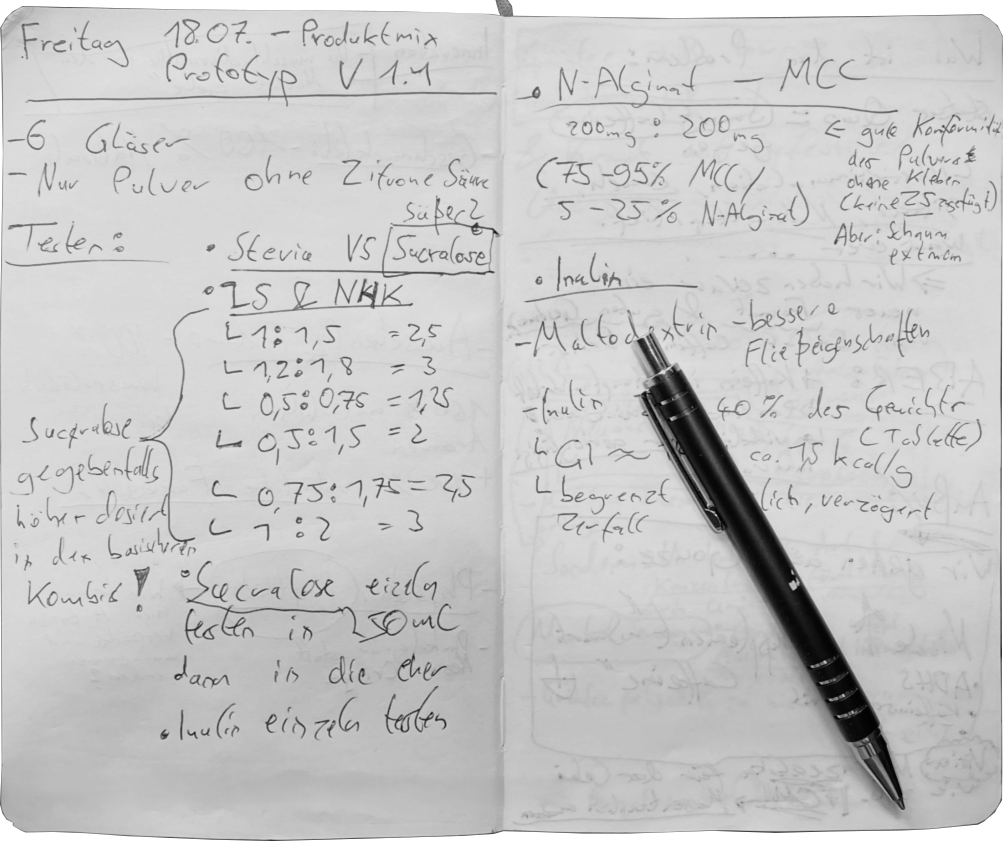
However, I am not satisfied yet. Batch 001 lacks the clear look, has guarana particles upon dissolution, and the green tea notes sit further back than in my home-lab version.
Three variables are identified and will be patched in Batch 002. Early testers get first access at founder pricing. (Targeted launch date fall '26)
Most important: How to use
Most important: How to use
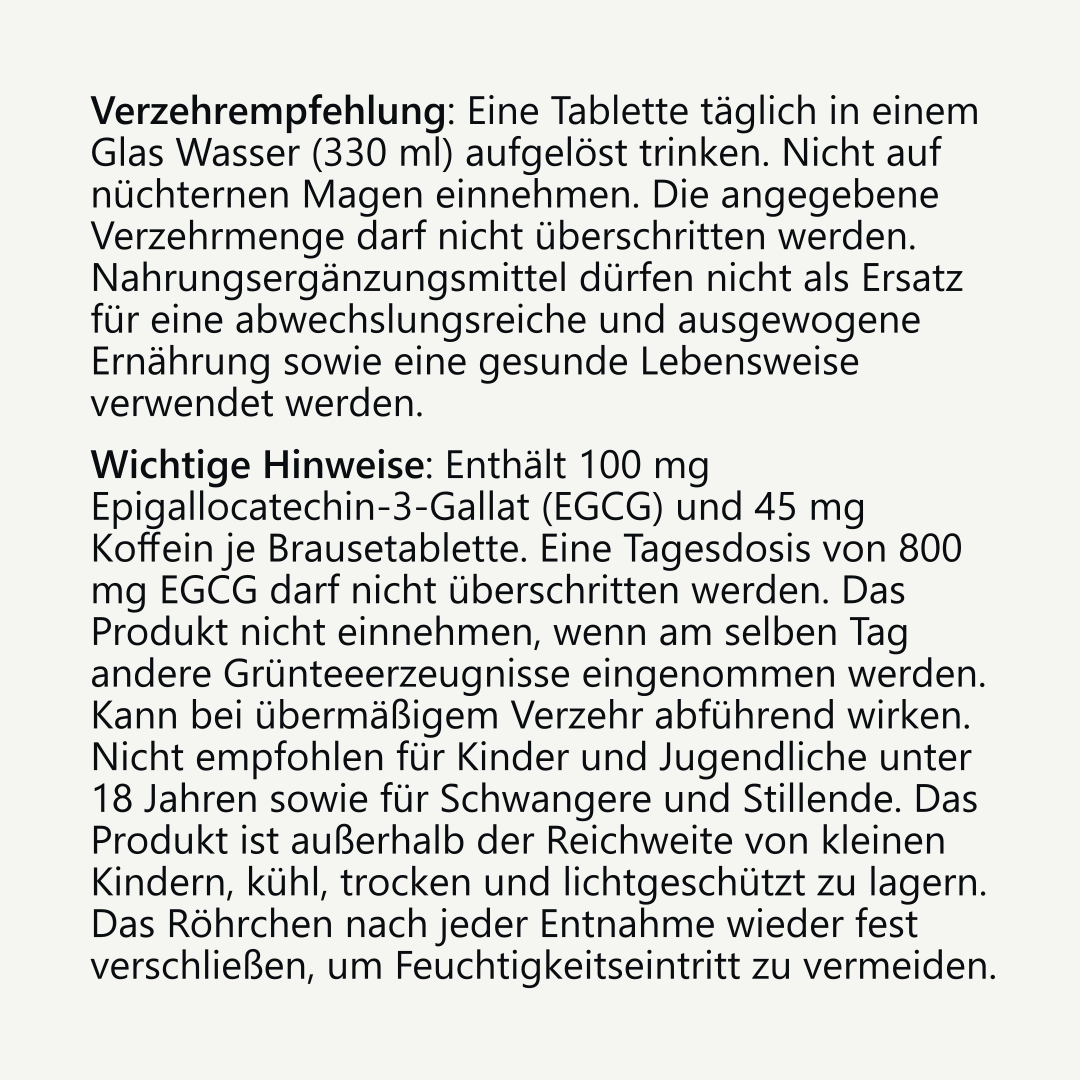
Dissolve 1 tablet in a glass of water. Do not consume on an empty stomach, as this could cause discomfort in some people.
Why buy a prototype?
Why buy a prototype?
Because it is working. No surprise when you take actives dosed in line with research.
Next, we refine taste and look.
If you need it pretty before anything else, wait for Batch 002.
What it is not
What it is not
Not an energy drink. Not a “more stimulation” product. Not a supplement that needs a paragraph to explain why it works. One mechanism, three active compounds, nothing else.
Quality
Quality
Designed and lab tested in Germany. Natural actives come from green tea sourced from Fujian and guarana from the Brazilian Amazon.
Formula
Formula
We calibrated green tea and guarana extracts in over 100 iterations to combine function and flavor.
Support
Support
Contact us here
Legal
Legal
Shipping and withdrawal terms in footer.


Three coffees in and you finally feel like you can move.
You start five things at once because the energy is here and you do not trust it to stay.
An hour later you have opened 20 new tabs but finished nothing.


Designed for the mind that knows its standard
On some days nothing can pull you out of work and if it does there is a magnetic feeling sucking you back in.
KLARIS helps you have more of those days.


While green tea has not been fully understood in its effect on the human mind, the most likely explanation is the synergy of its individual ingredients.
Caffeine lifts. L-theanine steadies. EGCG protects. To perfect this system, we added guarana that extends caffeine content precisely.

Think of it this way: The car will not move without stepping on the gas but in order to drive the maximum distance we have to limit when and how much to tap the pedal.
Caffeine creates this stimulus by blocking the adenosine related downregulation of our brain. Without control, it overshoots. You know the feeling. Alert but scattered. Twenty tabs open. Nothing finished.
L-theanine narrows the signal. The stimulation stays. The noise around you drops. That is the state in which quality work is possible.

Your brain uses roughly 20% of your body's total energy. Hard work and arousal demand more ATP, producing more adenosine, signaling more fatigue.
When caffeine wears off, all this blocked adenosine floods your brain with the signal to rest.
Both EGCG and guarana polyphenols have been found to support mitochondrial function. A more efficient energy metabolism helps the system to clear these tiredness signals more effectively.
Less building up, less falling down, more clarity.

Under pressure, your cortisol is already elevated. By blocking the adenosine receptors that would normally soothe you, caffeine is pouring gasoline on the fire.
On a calm Monday that combination is right enough to fight the weekend's sleep debt. One day before deadline, it produces something else. Your sympathetic nervous system is out of control.
L-theanine is mistaken for glutamate by your brain without causing its effect. It is found to help with too much nervousness and stressful energy release, while it does not slow you down.

You already know what you are capable of. There is no need to explain to you what it feels like.
With KLARIS you get as much control as possible over things that get in the way of your work.
Twenty minutes in, I usually sense that distraction loses its grip. Coffee gives me many thoughts but none I can finish. This is different.

Marketing claims decide the key ingredients and doses.
It is almost impossible to find products offering more than generic formulas.
Their products work backwards. The claims come first. The ingredients and doses follow to fit the story.
We are doing it the other way around, with evidence as the story.
45 mg Caffeine
Two sources.
Both come with a specific plant matrix.
Both synergies are not fully explained by science yet.
100 mg L-theanine
The ratio matters more than the total amount.
Most products add it randomly, while researchers use a 1:2 ratio (caffeine to L-theanine)
Few dose it against the caffeine.
100.7 mg EGCG
Green tea is gaining popularity. Its actual EGCG amount is rarely disclosed.
As our goals depend on this dose; you'll find a comparison to a cup of matcha below.
| Matcha | Green Tea Supplements | KLARIS | |
|---|---|---|---|
|
Smart Caffeine
Using the synergy of caffeine and L-theanine for reduced side effects and improved cognitive performance
|
|||
|
Meaningful Dose
We rely on doses used in clinical trials. This allows you to feel an effect beyond the placebo
|
|||
|
Standardized Extracts
Most products list certain extracts without measuring what's inside. To calibrate the drink we focused on green tea's EGCG and guarana's exact caffeine content
|
|||
|
Taste
Matcha and a cup of green tea will vary with each preparation. Capsules take obedience to swallow and grant no rewarding experience. With KLARIS you gain consitency and sensation.
|
|||
|
Bioavailability
Effervescent tablets show improved absorption of the actives in some studies. Athorities find ingestion of EGCG via beverages to be safer
|
|||
|
Asian Tea Ritual
Matcha carries 800 years of Japanese tea culture we can't replicate. If you are looking for authenticity, drink Matcha, for focus and taste we build KLARIS.
|
-

I stumbled across something that worked. KLARIS is building on exactly these findings and the research behind it.
From first grade to my master's and even after when working in investment banking and private equity I had a particular weakness:
Concentrating on the task in front of me.
I spent the majority of my life in search to fix this simple issue and to become like everyone else. Only to find that I am not the only one suffering from this issue. That ultimately my true passion was not finance but the very issue I suffered from the entire time.
I stumbled over green tea and got curious, the rest is history. Warning from my side: This is not a stimulant. If you are sleep-deprived and had a heavy lunch, you may even yawn. That is the honest answer.
What KLARIS does takes place behind the scenes. You sit down at 9, you work, you drink KLARIS when you feel it is needed and at 7:30 in the evening you look at the clock and think it should be 4.
You concentrated and you didn't even notice it. In a world without face time you could even go home because you finished what you came for. I am not selling you a product I developed for a new trendy nootropics market. I am offering you something I built for myself and tested on people I care about.
If that distinction matters to you and you don't believe in miracle compounds, we probably think alike.

- Caffeine alone increased participants alertness with possible side effects of headaches and mental fatigue
- The combination made them faster, more alert, more accurate on demanding tasks, and less distracted
- Effects that neither substance produced alone.
The study closest to the KLARIS dose (97mg theanine, 40mg caffeine) found significantly improved task-switching accuracy and self-reported alertness
Papers:
Haskell et al. (2008), Biological Psychology
Double-blind, placebo-controlled, crossover. L-theanine 250 mg + caffeine 150 mg.
Owen et al. (2008), Nutritional Neuroscience
Double-blind, placebo-controlled. L-theanine 100 mg + caffeine 50 mg.
Giesbrecht et al. (2010), Nutritional Neuroscience
Placebo-controlled. L-theanine 97 mg + caffeine 40 mg.


What do you expect from KLARIS?
Does it actually work?
The individual active compounds in KLARIS are well-documented. The combination of L-theanine and caffeine has been studied in clinical trials and shows measurable improvements in attention and cognitive performance compared to caffeine alone.
EGCG, the primary polyphenol in green tea, has been associated with alpha wave activity in the frontal cortex, the neural pattern linked to calm, focused attention. It is also a strong antioxidant which positively impacts the body's energy metabolism.
We document our formula decisions and the evidence behind them in our Lab Notes. Lab Note 001 covers the green tea plant's compounds in detail.
What if I don't feel it?
Cognitive response to any compound varies. Baseline caffeine tolerance, sleep quality, stress load, and individual neurochemistry all influence how noticeably KLARIS works on a given day.
We built the formula around mechanisms with consistent research support, not around peak effects in optimized lab conditions.
If you are unsure whether it suits you, one tube is a reasonable starting point. Twenty servings are enough to observe a pattern across different conditions, to find the optimal use case.
Can't I just drink a couple cups of green tea as well?
Technically yes, but a cup of bagged green tea can hold anywhere from 20 to 50 mg of EGCG depending on leaf content, grade and how you brew it. To match one KLARIS tablet you'd have to guess between two to five cups. The same variance hits caffeine, L-theanine and fluoride. You never quite know the dose you're getting, if you have no other alternative I would still go for whatever green tea you can get. [1]
The science behind it:
Extraction efficiency: Bagged green tea uses steeping, which only extracts about 15–25% of the available polyphenols. KLARIS uses a concentrated and standardized extract, ensuring you get the full bioavailable payload of the "Big 4" catechins immediately.
Matcha vs. bagged tea: Matcha is superior to bagged tea because you consume the whole leaf. However, even premium Matcha varies wildly in potency and nutraceutical balance.
The KalibriTee™ approach: While Matcha may be the most potent form of tea itself, KLARIS is based on consistency and precision. It combines EGCG, L-theanine and caffeine with the full polyphenol profile of guarana. The result is a focus drink that builds on green tea's function without the brewing variance of traditional tea.
When should I take it?
It works best during periods of high cognitive demand.
Deep work sessions
Long meetings
Mentally intensive afternoons
Use it as a replacement for the second, third and beyond coffee.
How fast does it work?
Effervescent delivery is designed for a fast onset and better bioavailability after dissolving in water. Individual response varies. Scientifically, caffeine plasma concentration peaks within 30-120 minutes, depending on factors like food and smoking. You will mostly likely feel the effects onset before.
Does it taste like a supplement?
Right now, a little. The lime aroma is missing natural acidity, and the aftertaste is hard to define. It reminds me of something, but I can't quite put my finger on it.
KLARIS is best served cold and you decide the intensity of how it tastes: ~400 ml for a milder experience, down to 250–350 ml if you want it more intense.
Fixing the flavor is one of the three things I am changing for Batch 002.
Can I take it daily?
Yes, it is designed for regular use within the recommended intake of one tablet per day.
Due to its caffeine content, individual tolerance should be considered. It is
generally practiced to reset caffeine tolerance when effects are diminishing.
Abstain for up to a week if consuming caffeine seven days a week. The other compounds are tested for tolerance in longitudinal studies without meaningful effects.
Is it safe with coffee?
Yes. We suggest to start low. Avoid stacking too many different caffeine sources. If you are sensitive to caffeine, use increased caution. If you feel overstimulated try breaking the tablet in half.
Why no fancy packaging?
Effervescent tablets are moisture-sensitive, which is why proper protection is an essential part of the format.
The packaging prioritizes function, clarity, and practicality at very low amounts of waste.
DEEP DIVE IN THE SCIENCE
View all-
Lab Note 003: Polyphenol energy support
Robert NoffkeFatigue is often approached as a simple caffeine problem, yet stable cognitive output depends on more than temporary wakefulness. This lab note examines energy metabolism at the cellular level, focusing on energy support for healthy brain function. It reviews research on polyphenols that interact with oxidative stress, mitochondrial regulation, and the broader metabolic environment in which ATP is produced. EGCG from green tea is discussed as a compound linked to antioxidant defense, stress response signaling, and mitochondrial pathways, while guarana is found to offer a more complex mix of plant compounds whose cognitive and metabolic effects may extend beyond its caffeine content alone. Key findings from Lab Note 002 In Lab Note 002, we differentiated arousal from attention control and...

